

When Thermal Transfer Meets Hot Stamping: K 5030 Surprises in a Real-World Test

 Case Study
First off - not necessarily recommended for replication: This successful test does not constitute general approval of K 5030 for hot stamping applications. Specially developed coding films are intended for this process.
Initial Situation
At a manufacturer of meat and sausage products, the labeling previously used no longer exhibited its usual durability after the pasteurization process. In particular, problems with smudge resistance arose after the final cooling phase.
To identify the cause, the application was examined in collaboration with experts from KURZ TYPOFOL.
A unique aspect: Prior to the visit, it was not clearly known which marking method was actually being used - thermal transfer printing or hot stamping.
Challenge
Two Technologies - Different Requirements
Both processes use heat for ink transfer, but they function differently.
In thermal transfer printing, the ink layer is transferred via precisely controlled heating elements in a thermal print head. The print image is generated digitally and without a fixed printing plate.
In hot stamping, by contrast, ink is transferred by a heated stamp that presses the foil onto the substrate using mechanical pressure. The print image is determined by the stamp. Specially designed coding foils are used for this purpose.
An on-site inspection revealed that the system in question was a hot stamping unit. Additionally, unevenness on the counter plate made uniform ink transfer difficult.
Solution
K 5030: A Surprising Result
Since a thermal transfer application was initially under consideration, the K 5030 thermal transfer ribbon was selected for the field test. Although the application turned out to be hot stamping, K 5030 was tested under real production conditions - with surprising results.
At 165 °C and a contact time of 0.3 seconds, a very good print image was produced. Particularly striking: K 5030 compensated for the existing unevenness of the counter plate remarkably well. The real test came during the production process: Sealing at 145 °C, 20 minutes of pasteurization at 84 °C, and subsequent cooling in a water bath at 2 - 5 °C.
Result
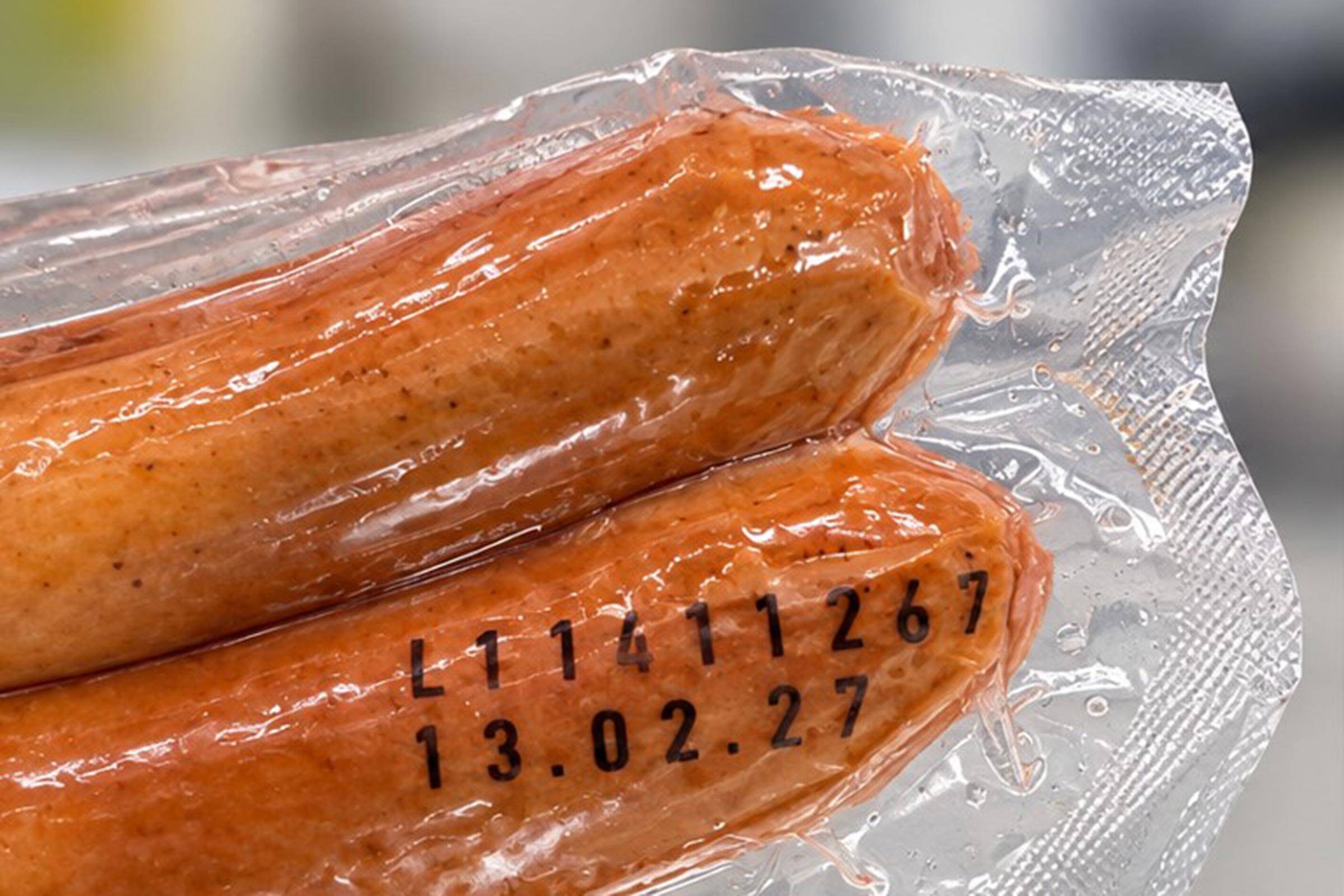
The result: The label produced with K 5030 remained flawless and durable even after these processes.
Impressive - even though it wasn’t designed for this, but the field test showed:
- Very good print quality on the hot stamping unit
- Good compensation for unevenness in the counter plate
- High durability throughout the entire pasteurization process
- Surprising performance outside the intended range of application
Thus, the test provides interesting insights into the performance and robustness of the K 5030 thermal transfer ribbon.
Conclusion
Sometimes the most interesting results come from where you least expect them.
K 5030 was developed for thermal transfer printing - yet it still performed impressively in a practical test on a hot stamping unit. This does not mean that hot stamping is a new recommended application for the K 5030 ribbon.
However, it impressively demonstrates the performance potential that can be found in a high-performance thermal transfer ribbon. At the same time, this case underscores the value of practical application tests: With its own product development and technical expertise, KURZ TYPOFOL helps to evaluate even unusual marking requirements under real-world conditions.
Do you face a particular challenge with product labeling? Our application experts are here to help you find the right solution.


